Showing posts with label rice noodles. Show all posts

Tuesday, 28 May 2013

Wagamama Week: Rice Noodle Soup

We used the leftover konbu and katsuobushi from making yesterday's dashi to make a second dashi stock for this recipe, which did indeed taste stronger and more interesting than the primary stock. Unfortunately, the subtle notes were buried under an avalanche of miso...

Ingredients (Quantities in brackets are my revised suggestions):
  • 150g rice noodles
  • 500g tofu block, cut into small steaks (400g)
  • 2 tbsp miso paste (1/4 tsp -- not a typo!)
  • 1/2 tsp shichimi (1 1/2 tsp)
  • 1 tbsp vegetable oil
  • handful of roughly-chopped choi sum
  • 2 spring onions, trimmed and sliced
  • 1 litre miso soup (600 ml)
  • small handful of coriander
Cook the rice noodles according to the packet instructions. Lightly blot the tofu steaks with kitchen paper. Combine the miso paste with the shichimi and spread over the tops, then fry on a hot griddle, miso-side up, for 6-8 minutes or until the tofu is hot and the base is crispy. Remove the steaks to a warm plate and fry the choi sum and spring onions on the griddle for a minute, until just wilted. Serve the noodles topped with choi sum topped with tofu, with miso soup ladled over.

Verdict:

The tofu stands up to the frying nicely, much better than yesterday's mushrooms. But:

WHOA. MISO. SO MUCH MISO. MORE MISO THAN MY TASTE BUDS HAVE ROOM FOR.

Seriously, 2 tbsp of raw miso paste on your tofu is just too rich. I think you want just enough to stick the shichimi to the tops of the tofu... which on balance I prefer fried on both sides, for maximum crispiness. It's also important to serve this right away, since the crispy base immediately starts sogging underneath the stock, of which there is a ridiculous quantity in the original recipe.

Friday, 17 February 2012

Deep-Fried Rice Vermicelli


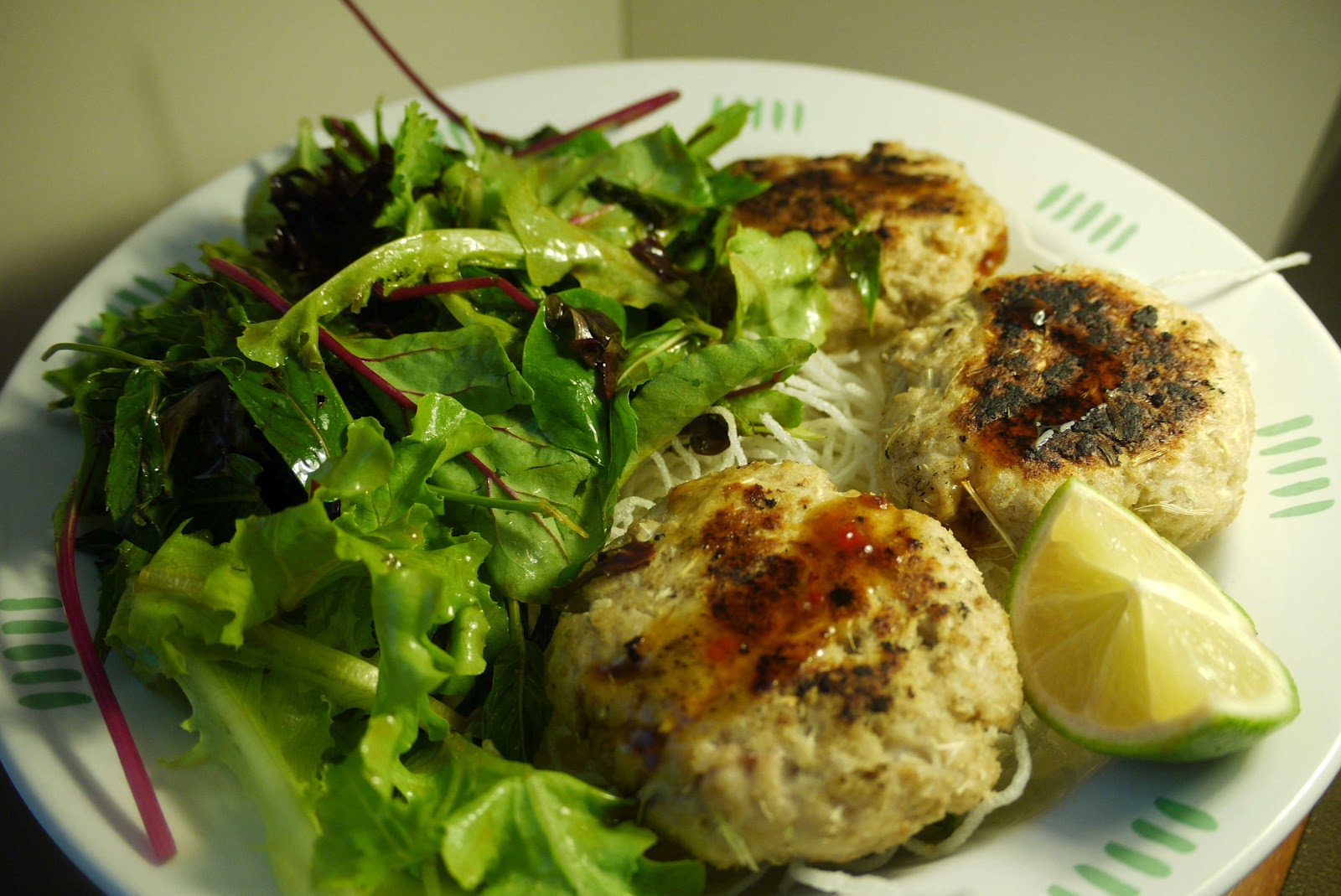
Chicken and Lemongrass Patties

It takes longer to type this than to actually cook it. We simply blended a chicken breast with the tenderest parts of a lemongrass stick and half a slice of bread, made small patties, lightly oiled and BBQ'd them for a few minutes a side. A dressing of the juice of a lime, a few tbsp of sweet chilli sauce and a dash of soy sauce gave a pleasing sweet-sourness to drizzle for the patties and a dressing for a herby salad, and we rested the patties on a bed of deep-fried rice vermicelli, which I have made a little video of since I love making it so much!

Friday, 30 December 2011

Rice Paper Rolls

I was amazed to find that I hadn't yet blogged this recipe, as it's become such a family favourite over the last few years. It's a meal best prepared by two or three people, as there are many stages that can be performed in parallel. After a couple of times making it, you'll find it takes less than an hour, and it's also a lot of fun!

Rice paper can be purchased in Asian grocery stores - usually one pack is enough for eight people, and costs only a few pounds / dollars. The rolls end up being about as long as half the diameter of the rice paper, so if you want small ones, buy small rice paper; large, buy large!

You can use whatever dipping sauce you like; I often use satay, but hoisin, plum or even just a little light soy sauce would all work perfectly. The filling ingredients can also be varied easily, and you don't need to make all of them the same. We often serve these rolls with hameul pajeon in a kind of Pan-Asian feast, but they work equally well with steamed rice or a light Asian-style salad, or just alone (and preferably, a bit smaller than shown here) as starters.

Instead of giving a guide to making an exact number of rolls (impossible!), I give examples of fillings, which you can use in equal volumes and just scale how much you cook depending on how many people you have. Don't feel like you need to include all of the ingredients, just pick the flavours you feel like using. The ones in the picture use carrot, cucumber, rice noodles, tonkatsu, mint and coriander.

Filling ingredients:
  • fresh herbs: mint, coriander, basil
  • cool crisp shredded vegetables: carrot, cucumber, lettuce
  • protein: tonkatsu, cold shredded beef, crispy duck, cold lemon chicken, deep-fried marinaded tofu, fresh tofu, tamagoyaki (sweet Japanese omelette), cooked shitake mushrooms, cooked prawns
  • carbs: cold rice, cold coconut rice, cold sweet rice, thick azuki bean paste, cooked rice noodles, fried rice noodles
You will also need:
  • a stack of dry rice paper rounds
  • hot water (boil a kettle and leave for at least 30 seconds)
  • a frying pan, deep enough to take some hot water and wide enough to easily place in and remove the rice paper
  • soft tongs, a wide slotted spatula, or asbestos fingers
  • two large, clean, flat plates

Start by preparing all of your ingredients - wash and pick leaves from herbs, shred the vegetables, cook your protein and ready your carbs. It's helpful to arrange these in small bowls or plates around the work surface where you will be making the rolls. Prepare any dipping sauces ahead; chill if needed.

Pour hot water into your frying pan and place a single rice paper round in it. Leave for 30 seconds or so, until malleable, then remove using the tongs, spatula, or just your fingers. If it tears easily as you remove it, you have left it in too long, so discard and leave the next one in for less time. If it is not easily flexible and malleable, put it back in. If the water goes cold, discard it and refresh with new hot water. If you run out of water, top it up! It's really nice to have one person readying rice paper and one or two others filling the rolls.

Place the ready rice paper round on one of the plates and add your fillings. I found this beautiful guide to rolling them perfectly, so check it out if you're not sure how much to add or how to roll. When it's all rolled up, place on the other plate. If you need to wait before serving them, make sure to sprinkle them with water and cover with cling film, or cover with a very damp teatowel, so that they don't dry out. They will last several hours unserved, but if you refrigerate them over night, the rice paper has a tendency to stick to itself, so they may tear as you pull them apart. If you really needed to keep them and not let them tear, you could put cling film between each one, but it's a bit of a waste of plastic :) Just eat them and enjoy!